
What to Expect During Your First Visit
Starting pelvic floor PT can feel a little intimidating, especially if you're not sure what to expect. You do not need to be "prepared" in any special way. You don't need to have the right words, know exactly what's wrong, or be at a certain stage of healing. My goal is to make your first visit feel comfortable, supportive, and never rushed.
Hearing Your Story
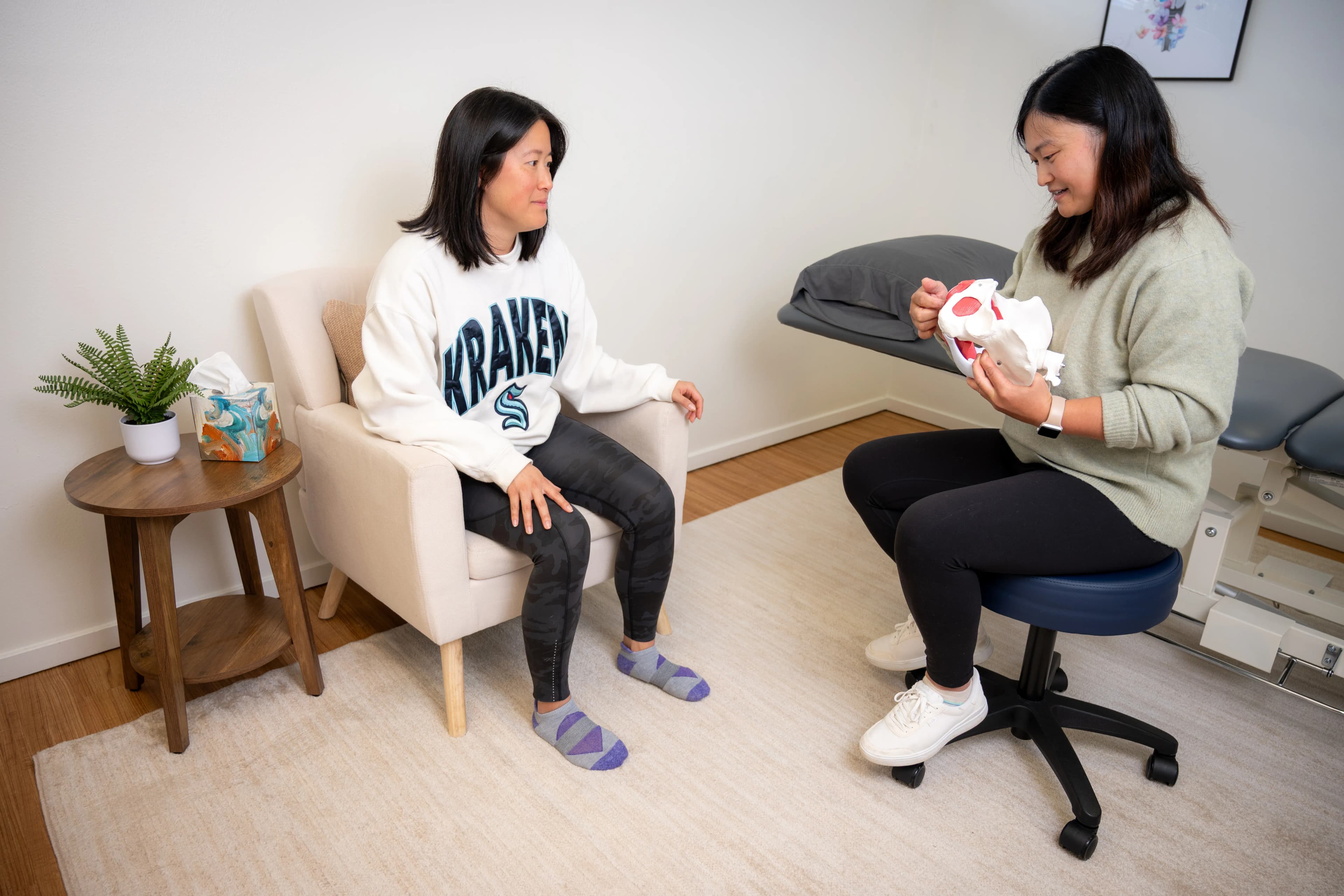
Your first visit starts with a conversation. We'll talk about your health history, symptoms, lifestyle (sleep habits, diet, work/social life), concerns, goals, and anything else that feels important to share. This is your time to tell me what's been going on in your body and nothing is ever "too much information!" Everything you share with me will help guide a treatment plan that feels personalized and tailored to your goals.
Movement Assessment
Next, I'll take a look at how your body moves. This may include evaluating your posture, breathing, core function, hip and back mobility, balance and movement patterns, and more. This helps me understand how your whole body is working together.
Pelvic Floor Exam — But Only If You're Comfortable
A pelvic floor assessment usually involves an internal vaginal exam (and/or rectal exam), which provides me the most information on how your muscles are functioning and better understand your symptoms. But I want you to know this is never required and I can still learn a lot without one. Your comfort and consent always come first. An exam can help assess strength, coordination, tension, tenderness, scar tissue, prolapse, and more.
We'll Connect the Dots
After the evaluation, I'll talk through what may be contributing to your symptoms. Healing is not one-size-fits-all. We'll discuss next steps based on your goals, lifestyle, and what feels realistic for you. Whether you're preparing for birth, recovering postpartum, dealing with pelvic pain, or just trying to understand what's going on — you don't have to figure it out alone.
You'll Leave with a Starting Plan
Before you go, you'll usually leave with a few personalized tools to start with at home. Depending on your needs, this may include breathing exercises, stretches or mobility exercises, pelvic floor relaxation or strengthening, core connection work, posture and movement tips, pressure management strategies, and more.
You might be wondering how many sessions it will take to feel better. It's difficult to give a number because it varies depending on your symptoms, their severity, how long you've had them, medical history, lifestyle, and most importantly, your commitment to healing. If you consistently attend appointments and put in the work at home, you'll typically see quicker improvements than if you show up inconsistently. Generally, it takes muscles 6–8 weeks to build strength. On average, you'll work with me for 10–12 sessions over 2–3 months. From there, most people move to a maintenance program, coming in once or twice a year, similar to how you'd see a primary care doctor or dentist twice a year. My goal is to give you the tools and knowledge to manage your symptoms independently, leading to longer-lasting relief and a healthier life.
Not sure if pelvic PT is right for you?
Book a free discovery call — no pressure, just a conversation.
In your free call, you'll:
- Discuss your symptoms and concerns
- Learn what treatment involves
- Get your questions answered
- No commitment required